
Judge in Anaconda murder case must consult media before sealing case documents, MT Supreme Court rules
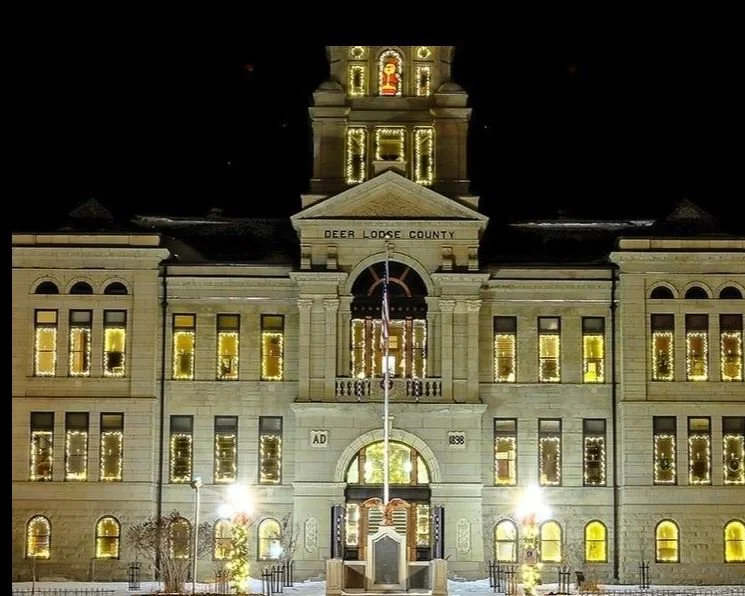
Anaconda-Deer Lodge County Courthouse (courtesy Anaconda-Deer Lodge County)
By MIKE DENNISON
Montana media outlets seeking to unseal court documents in a high-profile 2025 quadruple-murder case in Anaconda have won a Supreme Court ruling, which ordered the presiding judge to hear media arguments on whether the documents should be open to the public.
The 5-0 order from the high court on March 24 sent the issue back to state District Judge Jeff DaHood of Anaconda, who now must involve the media on whether to unseal documents in the murder case of Michael P. Brown.
“We’re gratified that the Supreme Court recognized that state law and legal precedent requires that the media must be involved in any decision to seal public records in a criminal case,” said Mike Dennison, president of the Montana Freedom of Information Coalition, which is part of the group that asked the high court to intervene.
“We look forward to showing that opening these records in the Brown case will be beneficial to the public and ensure a fair trial,” Dennison said.
Brown is accused of fatally shooting four people in an Anaconda bar last August. The shooting garnered national media attention, as Brown fled the scene and eluded capture for nearly a week.
Shortly after Brown’s arrest, prosecutors and Brown’s defense lawyers asked DaHood to seal multiple records in the case, including affidavits supporting charging documents and discovery-related material. DaHood agreed.
The Supreme Court said DaHood made “a mistake of law” when he did not consult with the media or conduct a hearing, as required by law, before deciding these documents should be sealed to protect Brown’s right to a fair trial.
The Supreme Court also chastised the Anaconda-Deer Lodge clerk of court for refusing to even file the media coalition’s Jan. 20 legal request to be allowed to object to the sealing of the documents and ask for a hearing.
The clerk merely gave the coalition’s request to DaHood, who quickly ruled against the media organizations, saying they had no standing in the case. The Supreme Court said refusing to file the request violated state law and “undermines the transparency principles inherent in (right-to-know provisions of the state constitution).”
After DaHood rejected the media’s request, the media outlets then asked the Montana Supreme Court to overrule that order and require media involvement or simply declare the documents open.
The Supreme Court declined to declare the documents open, but did say DaHood must consult the media on whether to seal the documents, hold an evidentiary hearing if closure is still sought, allow the media to take part in the hearing, and make specific findings to support any decision to seal the documents.
“These requirements are not discretionary,” Chief Justice Cory Swanson wrote for the high court. “These procedural requirements are essential to ensure that the constitutional balance between public access and fair trial rights is properly evaluated.”
As of March 30, Judge DaHood had not indicated how his court will proceed on determining the future status of the sealed documents.
The media coalition, which includes the Montana Newspaper Association, the Montana Free Press, the Montana Broadcasters Association, Lee Enterprises, the Daily Montanan and the Montana Freedom of Information Coalition, maintained that Judge DaHood and parties in the criminal case ignored the law and legal precedent when they agreed to seal multiple documents in the Brown murder case.
State law says a judge can close pre-trial criminal hearings or records only if information from those proceedings “would create a clear and present danger to the fairness of the trial” and only if the effect on trial fairness “cannot be avoided by any reasonable, alternative means.”
But, the law also says the judge shall “seek the voluntary cooperation of the news media in delaying dissemination of potentially prejudicial information.”
The Supreme Court said in its March 24 order that it has established “mandatory procedures” that must be followed before criminal-case court records are sealed, including consultation with the media, a hearing on whether alternatives exist to sealing the records, and specific findings that any sealing of documents meets legal requirements.
Those procedures haven’t been followed in the Brown case, it ruled.
Mike Dennison is president of the Montana Freedom of Information Coalition